Autonomous Systems
Navigation, obstacle detection, sensors and automated decision-making.
A selection of robotics, programming, engineering, simulation and creative projects that demonstrate my interest in building systems, solving practical problems and communicating ideas through technology and visual storytelling.
Navigation, obstacle detection, sensors and automated decision-making.
Remote control, servo systems, embedded programming and hardware integration.
Virtual testing environments, robot behaviour and navigation modelling.
Stop-motion, cinematography, editing, visual effects and storytelling.
A practical engineering project combining sensor input, movement control, embedded programming and autonomous decision-making.
I designed and built an autonomous robot capable of navigating through a maze while detecting and avoiding obstacles. Ultrasonic sensors were used to measure surrounding distances, while an inertial measurement unit helped improve movement accuracy and directional control.
Arduino-based embedded control programmed in C++.
Ultrasonic sensors and an IMU for obstacle detection and movement feedback.
Autonomous route selection, correction and obstacle avoidance.
Mechanical design, testing, debugging and iterative optimisation.
These projects focus on communication between hardware and software, responsive control systems and safe virtual testing before physical implementation.
I developed a remotely controlled robotic arm using servo motors and Bluetooth communication. A Raspberry Pi running Python handled the backend control logic, while a custom smartphone application built with React Native was used to send movement commands to the robotic system.
The prototype achieved responsive remote movement and demonstrated effective communication between the mobile interface and the robotic arm.
I created a Gazebo simulation environment for testing a mobile robot under different conditions. ROS was used to model robot behaviour, navigation and responses to obstacles in a cluttered virtual environment.
The simulation demonstrated autonomous navigation, environmental awareness and obstacle avoidance in changing virtual scenarios.
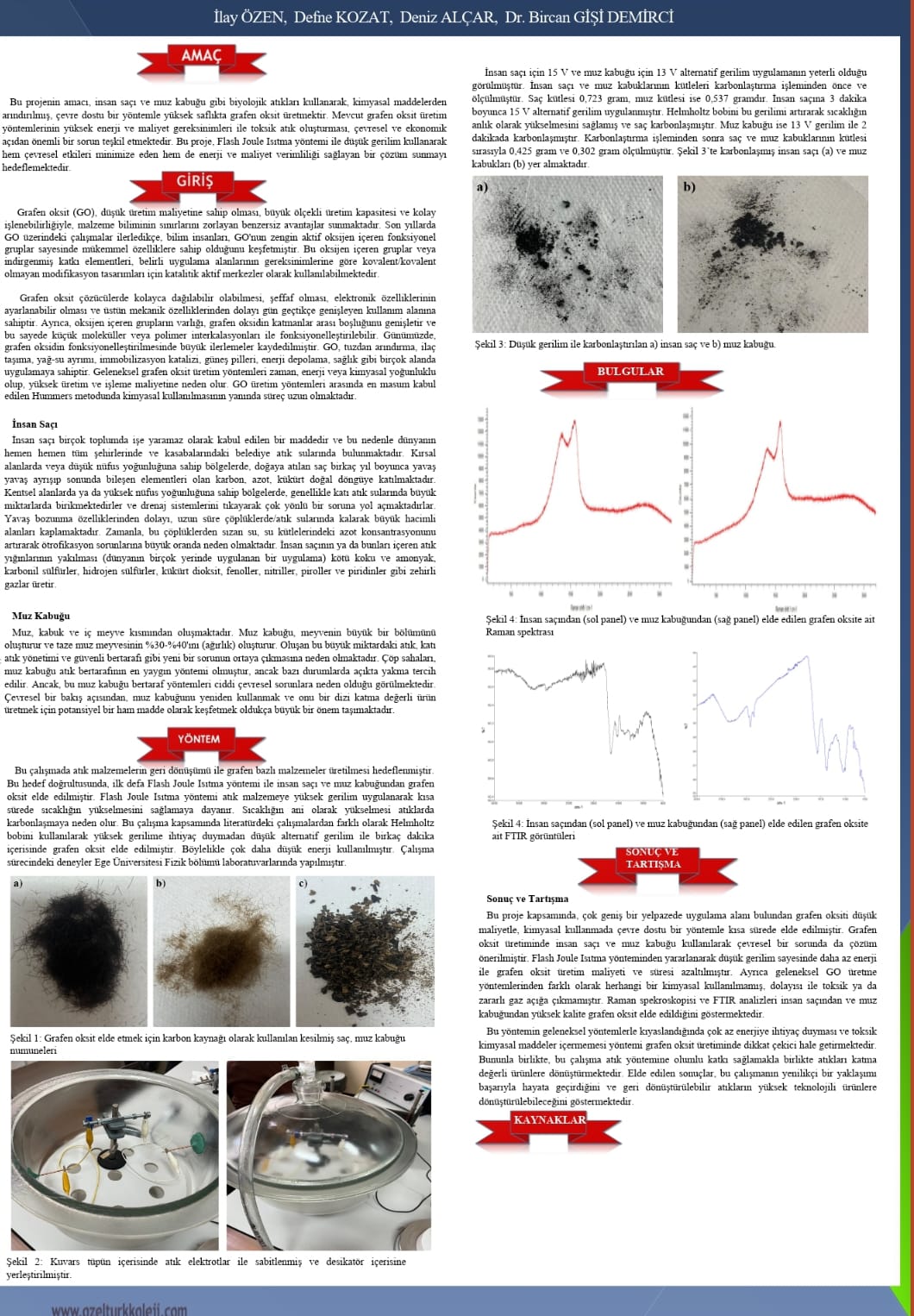
As a team of three, our objective was to produce graphene oxide from waste materials using Flash Joule Heating.
Flash Joule Heating is a rapid, high-temperature process that converts carbon-based materials into graphene-based materials within milliseconds by applying intense electrical pulses.
Through our experiments, we successfully generated graphene oxide using human hair and banana peel as waste-based carbon sources. The project was selected as one of the top 10 finalists nationwide in the Aziz Sancar Science and Technology Competition.
This project combined condensed matter physics, sustainability and experimental problem-solving.
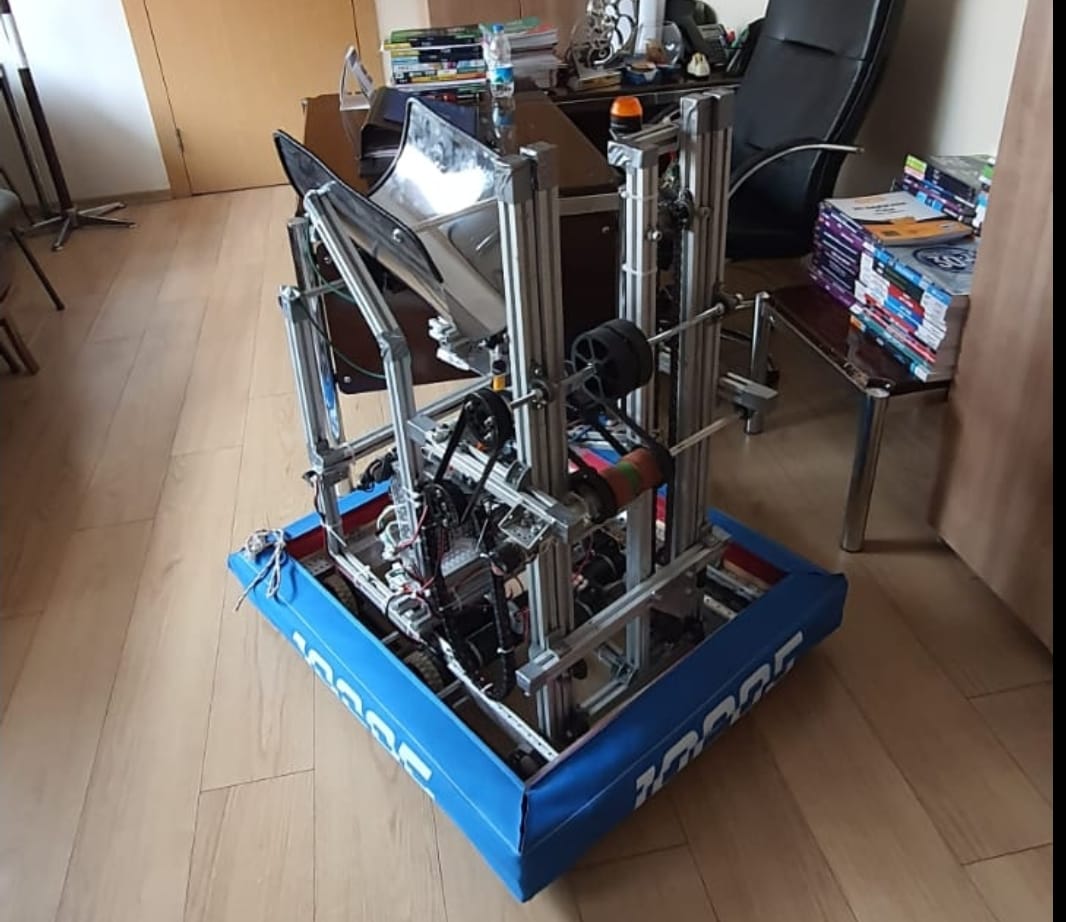
We joined the FIRST Robotics Competition as Team Magnetar. Through our technical effort, teamwork and strong relationships with other teams, we earned the prestigious Rookie All-Star Award.
Explore the Magnetar Project
I joined the CERN Beamline for Schools competition with my team, where our project focused on researching time crystals — a novel non-equilibrium phase of matter.
The project provided a valuable introduction to quantum mechanics, condensed matter physics and experimental research, allowing me to take my first steps into the study of quantum systems.
COSQEN is a physics-focused interactive challenge platform that combines conceptual physics problems, competitive quizzes, leaderboards and certificates within a single intelligent system.
The project aims to make physics learning more engaging, measurable and accessible through gamified scientific interaction.
My filmmaking projects combine planning, frame-by-frame precision, camera technique, editing and visual storytelling.
A LEGO stop-motion production with multiple scenes, characters and action sequences. The film was created frame by frame and edited to establish fluid movement, cinematic pacing and visual continuity.
The film was shared with a wider community of LEGO enthusiasts and received positive feedback for its creativity, visual detail and frame-by-frame execution.
I first entered Robotex as a solo competitor. Although I did not secure a national award that year, I took the experience as motivation rather than a setback.
The following year, I returned as the team leader. We proudly achieved 2nd place nationwide in Turkey and then earned both 1st and 2nd place at the Robotex World Finals.
2nd place nationwide in Turkey, followed by 1st and 2nd place achievements at the Robotex World Finals.
Across technical and creative work, I follow a similar process: understand the objective, build a first version, test it carefully and improve it through observation.
Identify the project objective, limitations and the main question the system or production must address.
Select suitable technologies, components, software tools and a practical implementation method.
Produce a working prototype or first version and observe how it performs under realistic conditions.
Correct weaknesses, refine the result and present the project clearly through documentation or visual media.
Each project has helped me develop a different combination of analytical reasoning, technical accuracy, creativity and persistence. These experiences support my broader academic interest in physics, engineering and scientific research.